Although DCM carefully tracks numbers and outcomes, these statistics can never show the impact of our efforts. The true value of DCM's ministry is found in the stories of families who have found their way to a brighter future.
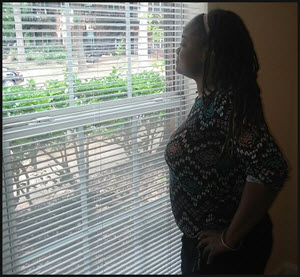
Cynthia knew that February 11 was the last day she could lock a door behind her and stay out of the cold. She had fallen behind on rent at the extended stay hotel where she and her 14-year-old son Chris had been living, and the hotel manager gave her the final notice that security guards would arrive to lock them out that night.
“I am going back to volunteer. I've never done any volunteer work in my life, but being at Hagar's House and seeing the struggle people have, I will gladly volunteer. I will volunteer to do anything.” — Cynthia
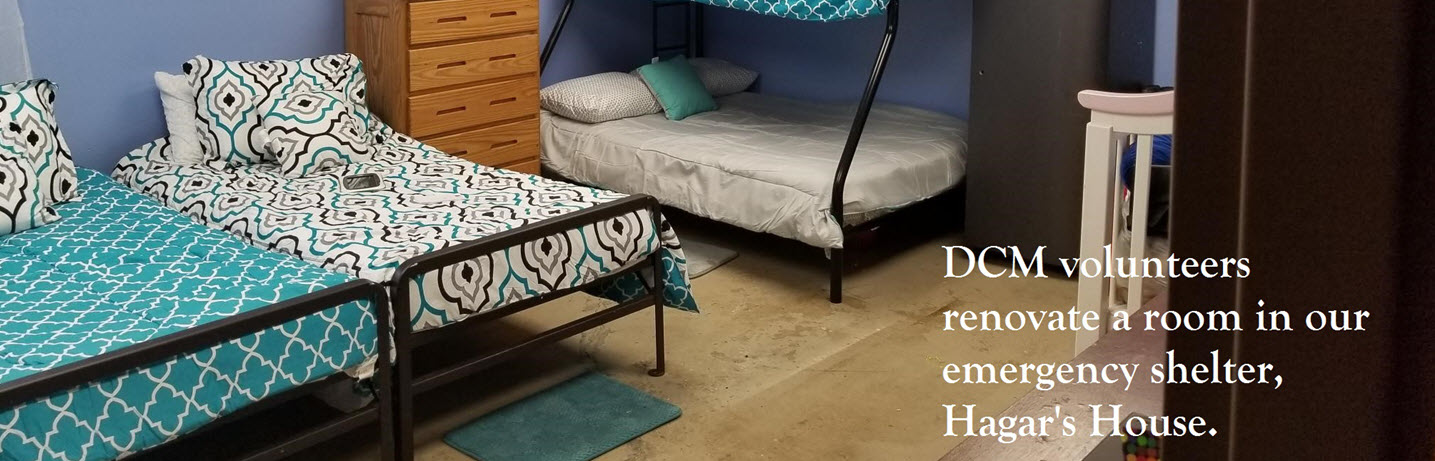
That morning, Cynthia reached out to an organization called Project Community Connections, Inc. (PCCI). Before the day was out, Cynthia and Chris were staying at Hagar's House, DCM's shelter for women with children. Before the week was out, she was at a job fair that led to full-time work. A little over two months later, she moved into a small apartment on a MARTA line.
Cynthia's experience was partly the result of a partnership between Decatur Cooperative Ministry, which provides temporary shelter, comprehensive services, and other programs to help families stabilize, and PCCI, which helps families find affordable permanent housing. In 2009, the partnership received a Homelessness Prevention and Rapid Re-Housing stimulus grant of $673,579 from DeKalb County, which will last through mid-2011. To date, DCM and PCCI have used the stimulus funds to re-house or prevent homelessness for a total of 88 families in DeKalb County. DCM kept 46 families from losing their homes, and PCCI placed 42 families back in permanent housing.
“As bad as it is that you have to go to the shelter, it was a very good experience for me and my son,” Cynthia says. “When I went to Hagar's House on February 11, Miss Sybil [Corbin, program manager] gave me resources. She told me I had to try to find a full-time job even though I was already working part-time. They gave me information about the job fair.” Cynthia was hired March 3 full-time as a suite attendant at the Marriott Residence Inn in DeKalb County and was recently interviewed for a supervisory position.
The next step for Cynthia was to find affordable housing near a MARTA line. PCCI uses Georgia Housing Search, an online referral and placement system that connects families with landlords of public and private housing. The agency helped Cynthia find the apartment in south Fulton and paid the deposit on it. But it was more than just an apartment locator.
“Miss Marlene [White, case manager] also works to make sure you're on task,” Cynthia says. “‘How are you feeling? How are you doing? Do you have any problems? Do you need clothes for interviews?’ Just a lot of things.”
“This place shouldn't even be called a shelter”.
While staying at Hagar's House, Cynthia attended counseling and financial management classes at night after working during the day. Despite the long days and stressful situation, she said her temporary home was more like a family than a shelter.
“It touched me so much the way they run Hagar's House and how much it's a family environment. They are really there to help you. This place shouldn't even be called a shelter. They will sit down with you because they know you. I appreciated just the fact that there were people out there that helped you. It was a family situation.”
Chris, now 15, attends school in Fulton County and is settling into the new apartment well. Living in temporary housing such as a hotel or shelter is far from uncommon among Georgia children. In DeKalb County and Decatur City schools alone, more than 1,600 homeless students were enrolled during the 2007-2008 school year, according to the 2008 report, Supportive Housing: An At-Risk and Homeless Plan for DeKalb County. The statewide graduation rate for these students is only 25% (2009 State Report Card on Homelessness).
It was the homeless liaison at Chris's school who recommended that Cynthia call PCCI last February. She was between jobs—a four-month assignment through a temporary labor agency had ended before Christmas, and a new second-shift job at a local laundry service was just starting. Because of her work record, the hotel manager had allowed her some flexibility in paying the rent, but eventually he demanded that she settle up.
By partnering, DCM and PCCI provide a full range of services to alleviate and prevent homelessness among families in DeKalb. DCM's services include an emergency financial assistance and education program, a food pantry and food cooperative, and long-term transitional housing, in addition to its shelter program. PCCI offers search and relocation services for affordable housing and in some cases, help with first month's rent or deposits. Together, the two organizations provide both temporary and permanent housing solutions for people who have found themselves in crisis.
Cynthia signed the lease on her new apartment April 19. She keeps in touch with Hagar's House and intends to return in a different capacity.
“I am going back to volunteer. I've never done any volunteer work in my life, but being at Hagar's House and seeing the struggle people have, I will gladly volunteer. I will volunteer to do anything.”
(Thanks to Nancy Saltmarsh for writing this story.)
Back to Top
Valda moved to Atlanta in the summer of 2005 with her four children and a work-from-home job lined up. When that work started dwindling and her car broke down, she found herself in the downward spiral familiar to many DCM clients.
Now Valda lives in a four-bedroom rental house in Covington that she hopes to own one day, and is employed by the Georgia Department of Revenue.
“We had gotten evicted from an apartment,” Valda recalls. “I was working from home as well as substitute teaching. The work-at-home position had started slowing down, so money, of course, decreased and the money as a substitute teacher was not sufficient enough to maintain our household expenses. I started getting behind with bills and rent and eventually got evicted. My car had broken down. We lived in an area with no transportation and I couldn't find a job within that area.”
Help and Hope
With the help of the Atlanta Union Mission, Valda and her children lived in a series of one-room hotels from week to week. After the help ran out, she applied to DCM's Family Transitional Housing Program in February 2006, and in April moved into the Winn House, owned by North Decatur Presbyterian Church.
The Winn House offered Valda and her sons more than a roof over their heads. It gave them the support system they had been lacking, in the form of North Decatur Presbyterian Church and DCM, which Valda calls “family”. Winn House, “…gave me and my family a sense of peace, safety and comfort. We loved the neighborhood and the surrounding schools. The people were friendly. We were comfortable there.”
A New Home
Now Valda lives in a four-bedroom rental house in Covington that she hopes to own one day and is employed by the Georgia Department of Revenue, where she recently was promoted to tax examiner. But that didn't happen by magic.
“When I first spoke to Valda on the phone, she was mentally worn out, tired and ready to give up on her family,” says Christy Oraelosi, Family Transitional Housing Program Manager. “I knew that she really wanted the best for the boys but was having a hard time. I did interview her the same day and encouraged her to keep her head high with faith. The family successfully completed the program on April 11, 2008. There was a time in the program that she lost her job and was unable to secure another one for four months. It was a roller coaster and she never quit trying or got discouraged. Fran Mohr and Becki Veal on the Family House interview team made a big impact in encouraging Valda and praying for her. Valda Brown and her four boys are very respectful and grateful for the opportunity given to them.”
(Thanks to Scott Roberts for writing this story.)
Back to Top
Before she found Hagar's House, Sonoma Harper spent a week at the Metro Atlanta Task Force for the Homeless with her four young daughters. She had lost her job and, unable to pay her rent, was evicted from her apartment. That was in November. In January she started a new life at Glenhill house in Decatur, where she and her family will live rent-free until they can make the transition into stable housing.
“I saw a person who wants to turn her life around and take care of her family. I saw a person who desperately wants to work again and earn money. I saw a person who wants a support system that will get her out of her situation.” — Program Manager
That journey, from homelessness, to a week on a concrete floor, to two months in Hagar's House, to a house of their own, is far from over. The goal of permanent housing requires budgeting, saving, and getting job training, all of which are happening now through DCM's Transitional Family Housing program, or “Family House”.
The Family House Experience
“My decision to take Sonoma was simple,” says Christy Oraelosi, program manager for transitional housing at DCM. “I saw a person who wants to turn her life around and take care of her family. I saw a person who desperately wants to work again and earn money. I saw a person who wants a support system that will get her out of her situation. She is willing to do whatever it takes to be successful in life. She is willing and ready to take criticism and realistic direction to better herself and her family.”
Sonoma is now getting trained in the Childhood Development Accreditation program at Our House. She is paid a stipend to attend the classes and will be certified in June. Her daughters, ages 4-10, attend Decatur City Schools. She says they love their new home.
“I wasn't expecting a house,” she says. “I've got a nice, pretty, good-size house. My kids love it, I love it. I treat this house like it's my own, clean it up, and make sure my kids do, too.”
She says Miss Christy is more than just a caseworker. She's a friend, too, who regularly “…comes over to the house to drop off a care package or something.”
Road to Success
Sonoma defines herself as someone who is “willing to use opportunities to the fullest” and says that when she gets her day care worker certification in June she may help run a day care center with a friend. But she has also taken a test to be a correctional officer and continues to attend job fairs and stay open to all possibilities.
“She is doing everything possible to take full advantage of this second chance,” says Christy. “Sonoma is taking life one day at a time. I believe that she will be a success because she concentrates her effort and energy on what's important. She focuses on her goals and the rules of the program, and is ready at all times to receive good advice from me. She is very willing to be open for any opportunity to better herself and her family.”
(Thanks to Nancy Saltmarsh for writing this story.)
Back to Top